Universal menu

  • Global
  • Regions
    • Africa
    • Americas and the Caribbean
    • Arab States
    • Asia and the Pacific
    • Europe and Central Asia
  • Knowledge
  • Data
  • Training
  • Transparency
UN Women – For ALL Women and Girls
Knowledge hub

Main Navigation-KP

  • Topics
    • Ending violence against women
    • Leadership and political participation
    • Women, peace, and security
    • Women’s economic empowerment
      • Migration
      • Sustainable finance
  • Resources
  • Articles
  • Countries

    UNW Knowledge Country Block

Breadcrumb

  1. Home
  2. Resources
  3. Publications
Image
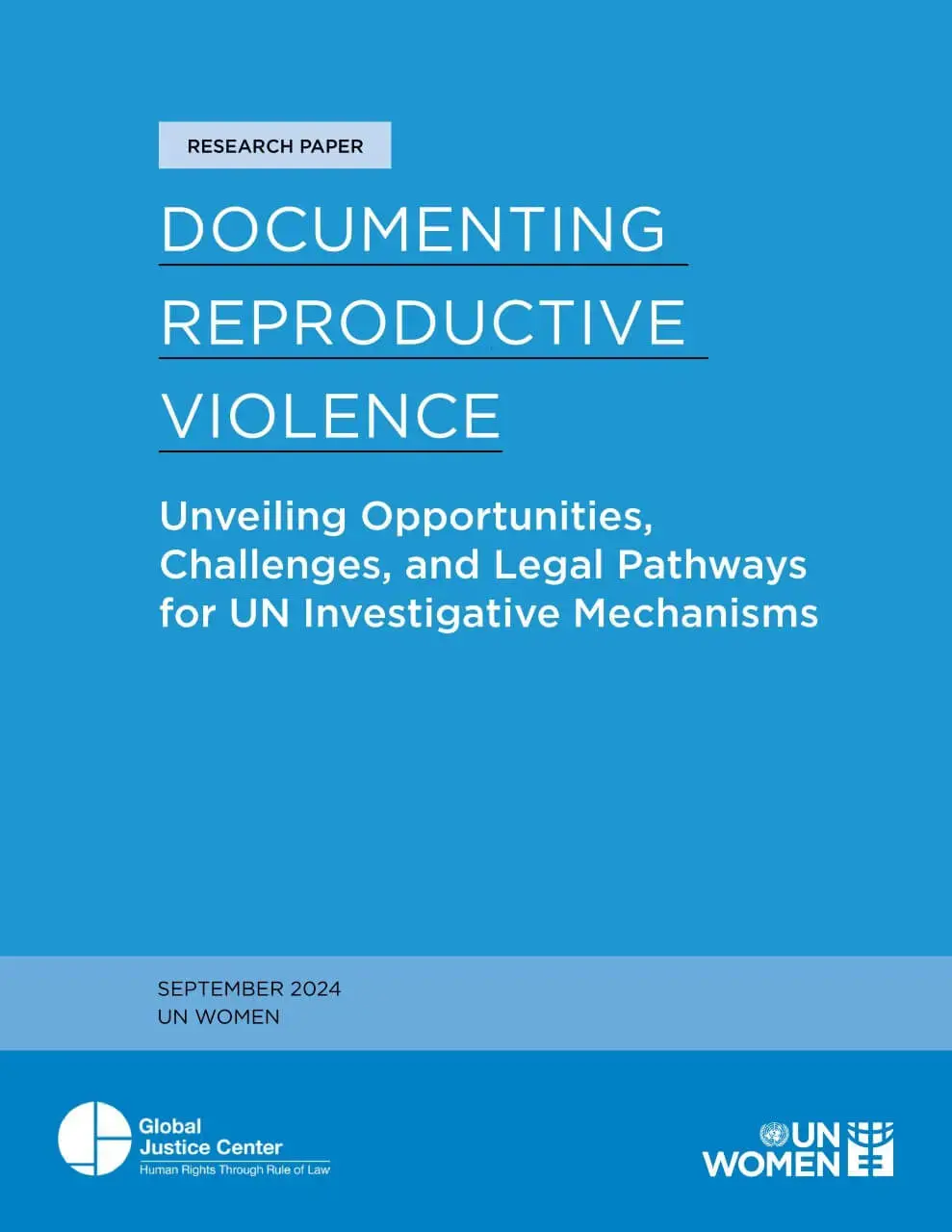
Documenting reproductive violence: Unveiling opportunities, challenges, and legal pathways for UN investigative mechanisms
DOWNLOAD
English

Documenting reproductive violence: Unveiling opportunities, challenges, and legal pathways for UN investigative mechanisms

Publication year 2024
  • Share to Facebook
  • Share to Twitter
  • Share to LinkedIn
  • Share to E-mail
Author(s)/editor(s) Tess Graham and Ashita Alag, Legal Advisers, Global Justice Center

Reproductive violence is a distinct form of sexual and gender-based violence (SGBV) targeting reproductive autonomy, a right protected under international law. The impacts of reproductive violence can be as profound, damaging, and long-lasting as those accompanying other forms of violence and can compound the pain of other forms of SGBV. Yet recognition of reproductive violence as a distinct harm has been overlooked historically, including in international investigations of atrocities, conflict, humanitarian crises, or other instability.

International investigations often play a key role in guiding international responses to crises, and the omission of reproductive violence can thus have significant ripple effects:

  • victims may go un- or under-recognized;
  • vital reproductive services may be absent from humanitarian responses;
  • prevention efforts may fail to address the risks and inflammatory impacts of this violence; and
  • justice, accountability, and reparations efforts may omit reproductive harms from consideration.

This paper analyses the documentation of reproductive violence to date by UN-mandated fact-finding and other investigative mechanisms. To enhance documentation going forward, the paper also provides guidance on the international law governing reproductive harms. The guidance explains how international criminal, humanitarian, and human rights laws prohibit reproductive violence—including forced pregnancy, enforced sterilization, forced abortion, forced contraceptive use, restricting access to reproductive care, destroying essential reproductive healthcare infrastructure, and other forms of reproductive violence.
View online/download

  • Publication (PDF, 450KB)
  • Q&A/explainer (PDF, 174KB)

Bibliographic information

Number of pages
81
Resource type(s)
Research papers
Publishing entities
Global Justice Center (GJC) United Nations Entity for Gender Equality and the Empowerment of Women (UN Women)
UN Women office publishing
Peace and Security, Prevention and Resilience Section (PSPRS)

Tags

Access to justice and legal protection Access to justice post-conflict Anti-violence interventions Conflict, war Health Human rights Peace and security Sexual and reproductive health and rights

Related publications

Reparations for conflict-related sexual violence: Lessons from the Western Balkans

Reparations for conflict-related sexual violence: Lessons from the Western Balkans

30 October 2017
Reparations for conflict-related sexual violence: Lessons from the Western Balkans
Intersectionality in investigations of serious human rights violations and international crimes: Guidance and practice tool - cover

Intersectionality in investigations of serious human rights violations and international crimes: Guidance and practice tool

26 January 2026
Intersectionality in investigations of serious human rights violations and international crimes
Expert Group Meeting on international strategies and tools to address the situation of women and girls in Afghanistan

Expert Group Meeting on international strategies and tools to address the situation of women and girls in Afghanistan

25 September 2023
Expert Group Meeting report-International strategies and tools to address the situation of women and girls in Afghanistan

KP Footer Menu 1

  • About the Knowledge hub
  • Ending violence against women
  • Leadership and political participation
  • Women's economic empowerment
  • Women, peace and security

KP Footer Menu 2

  • Articles
  • Explainers
  • Facts and figures
  • Frequently asked questions

KP Footer Menu 3

  • Podcasts
  • Publications
  • Videos

Donate button menu [Footer]

  • Donate

Social media menu

  • Facebook
  • Twitter
  • LinkedIn
  • Flickr
  • YouTube
  • Instagram
UN Women - For all women and girls
Share this page
  • Share to Facebook
  • Share to Twitter
  • Share to LinkedIn
  • Share to E-mail

Or copy link