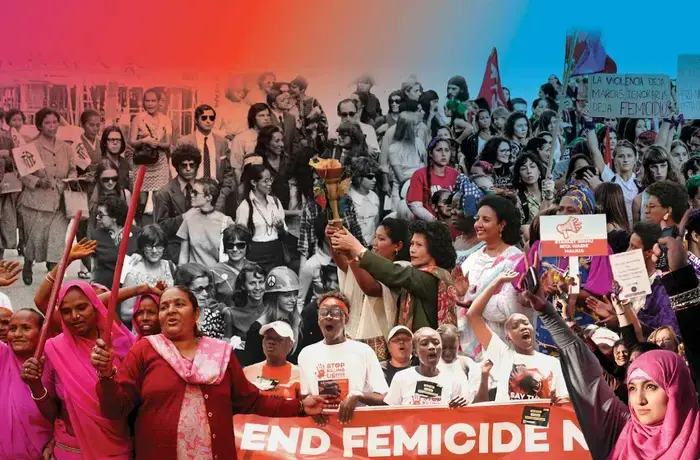
Case open: Justice for all women and girls
The People vs. Impunity against women and girls

Around the world, millions of women and girls face violence, discrimination, and abuse. Too often, the message they receive is the same: Justice and help is not on the cards for them. A rape case may never reach the court and the survivor suffers in silence. A workplace harassment complaint leads to no consequences and the toxic power dynamics persist. A woman seeks help at a police station but leaves without protection, only to go home and risk further violence and retaliation for speaking up. Women are denied equal pay, inheritance, and land rights – making it impossible for many to build prosperous lives and shape their own futures. This systemic discrimination is often so deeply embedded that it is impossible for many women to challenge it.
Laws exist, but they do not deliver justice or protection on their own. Women remain exposed to harm, forced to change their routines, jobs, and even homes – while those who caused harm face no consequences.
This is what happens when justice systems fail to protect women and girls, fail to listen to survivors, and fail to act. Violence and discrimination spread, and impunity tells perpetrators there will be no consequences, and that the rule of law does not matter.
This explainer puts that failure on trial.
What’s the charge? Impunity against women and girls
Impunity exists when harm happens without consequences. When perpetrators are not held accountable. When survivors are denied protection, recognition, or redress. When laws exist on paper but fail to work in practice. Or, when laws are biased against women and girls, offering no real path to justice.
No country has achieved full legal equality for women. Simply put, this means that in every corner of the world, laws still treat women and men differently. Women have fewer rights than men, by law. These legal gaps decide who is protected, who is believed, who can claim their rights, and whose version of events carries power. This is how impunity takes root: beyond the law, through narratives that downplay violence and violation, doubt women, and excuse those who cause harm.
The evidence
Exhibit A: The barriers to seeking justice
Women and girls face multiple, overlapping barriers when they seek justice:
- Fear – of retaliation, stigma, or not being believed.
- Silence – driven by familial and social pressure, shame, or threats, they may be silenced, or encounter silence from society or authorities.
- Cost – legal fees, transport, lost income, and care responsibilities that make pursuing justice impossible for many.
- Lack of legal aid and representation – without accessible legal support, many women cannot understand their rights, navigate procedures, or challenge decisions, and are forced to face justice systems alone, or abandon any hope for justice.
- Complex systems – fragmented institutions, red tape, delays, and language barriers that exhaust survivors, increase re-traumatization, and allow cases to stall without resolution. To deliver justice, many different institutions – such as the police, courts, medical services or legal aid – fail to work together.
- Bias and discrimination – in policing, courts, and institutions, and media.
- Backlash and stigma – retaliation after reporting abuse for speaking out, and the risk of being blamed or disbelieved. For example, many women report being labelled unmarriageable after experiencing sexual violence.
For women facing intersecting forms of discrimination – including migrant women, women of colour, women with disabilities, women living in poverty, women of diverse gender identity or sexual orientation, or women affected by conflict – these barriers multiply.
Did you know?
When we think of justice, we often picture criminal courts.
But for women, injustice most often plays out in civil and administrative systems – family law, employment disputes, housing, immigration, and access to benefits.
These systems decide safety, income, and autonomy, yet they are slow, costly, and often impossible to navigate without legal aid.
Exhibit B: Why access to justice matters
Justice for women and girls means:
- Safety – protection from further harm.
- Dignity – being heard, believed, and respected.
- Repair – access to remedies, support, and reparations.
- Prevention – stopping violence before it happens again.
When women can access justice, violence is stopped and addressed sooner. Abusers are restrained and held accountable, workplaces become safer, and families are less likely to be trapped in cycles of harm and violence.
Challenging impunity is one of the most important things we can do. It sends a clear message: violence and injustice will not be ignored. Accountability disrupts repeat abuse and makes violence harder to excuse or normalize.
Did you know?
Access to justice doesn’t just resolve cases, it changes lives.
Family law reform alone has enabled more than 600 million women worldwide to gain access to economic opportunities since 1970, by strengthening rights related to marriage, divorce, property, and inheritance.
When women can claim these rights, they are better able to leave abusive situations, secure housing and income, and rebuild their lives.
Exhibit C: When justice systems fail women and girls
Justice systems often mirror the same power imbalances that women encounter everywhere else.
A survivor is questioned more closely than the perpetrator. A judge might scrutinize a woman’s sexual history or behaviour instead of focusing on whether consent was given. And when decision-making power rests largely with men, women’s needs, risks, and realities are even less likely to be fully understood or reflected in how justice is delivered.
Did you know?
In some countries, justice systems are actively used to restrict women’s rights rather than protect them.
Under Afghanistan’s Taliban rule, women have been pushed out of courts, legal professions, and public life altogether leaving them with no way to seek justice. In Iran, women who challenge discriminatory laws or state violence risk arrest and prosecution instead of protection.
In Sudan, sexual violence has been used as a weapon of war, with women and girls assaulted with near-total impunity as justice systems collapse and survivors are left without protection, justice, or support.
In conflict and crisis settings, justice failures deepen even further. As violence escalates, courts collapse, institutions fracture, and accountability vanishes – even as conflict-related sexual violence soars and survivors are left to grapple with the consequences alone.
Exhibit D: Witness statements

If you are invisible in everyday life, your needs will not be thought of, let alone addressed, in a crisis.”
“You cannot arrest your way out of FGM. If the social incentives remain, families will find ways around the law – cutting in secret, crossing borders, or pressuring girls to comply.”
–Tony Mwebia, director of the Kenya-based Men End FGM organization.

When perpetrators are taken to court, that is important. But what happens to the girl who was cut? Who supports her healing, her education, her future?”
“They don't have (digital violence) laws that say anything about this problem. If you go to a public defender, they are going to say to you, you have to wait five years for this to be solved. Are you sure you want to start it?”
–Ljubica Fuentes, Founder, Ciudadanas del Mundo, an organization combating gender-based violence in higher education.

Judges, prosecutors, and even lawyers often lack the vocabulary and technical knowledge to grasp how digital environments operate, or what a digital crime actually involves. Survivors are made to believe that we are the ones to blame, while authorities often do not act because they think that if it happened virtually, it is not real.”
Exhibit E: What justice that delivers looks like
Gender equality advances when justice systems are designed to deliver for all women and girls. That means:
- Laws that protect, not punish survivors. Laws that clearly define sexual consent, protect survivors rather than scrutinize them, and remove discrimination – shaped with women’s needs in mind and with women’s rights organizations, not written in isolation.
- Systems that join the dots. A woman should not have to tell her story five times to five offices. Police, courts, legal aid, health and social services need to work together, clear pathways to justice, so that support is timely and coordinated.
- Prevention built into justice. Early protective measures and efficient procedures that stop violence from escalating make it harder for perpetrators to continue offending. Effective administrative systems protect women’s access to income, housing, and services, all critical to women’s safety and autonomy.
- Accessible and affordable legal aid. Support legal aid, including qualified community-based justice workers, like paralegals, to provide practical legal information so women can claim pay, property, custody, protection, and status in practice, not just in theory.
- Data and evidence that expose what’s being ignored. Gender-disaggregated justice data and accountability so that gaps are visible, progress can be tracked, and rollbacks can be addressed.
- Sustained financing. Rights do not enforce themselves. Justice services need consistent funding, so they are accessible, safe, and reliable — including survivor-centred services and legal aid.
Justice systems are constantly evolving. They shift as power is challenged and norms change – largely driven by women organizing, documenting harm, and demanding reform. Independent women’s rights organizations have been central to progress so far, but many are now facing extinction due to chronic underfunding and pushback.
Did you know?
Evidence shows that when women cannot access legal aid, unresolved legal problems often escalate into homelessness, poor health, child protection interventions, or incarceration – creating far higher costs for countries than providing legal support early on.
Timely legal aid works because it resolves legal problems before they cascade into violence, precarity, family separation, or long-term economic harm.
The verdict we’re fighting for: Justice for all women and girls
End impunity.
Hold perpetrators accountable. Every time.
Listen to survivors. Act early. Enforce rights!
Build justice systems women can reach, navigate, and trust.
Fund legal aid.
Remove discriminatory laws.
Confront bias head on anywhere decisions are made.
Invest in prevention, protection, and repair.
Stand with the women and organizations pushing systems to change – because justice only moves when people demand it and we are all better off in a just society.