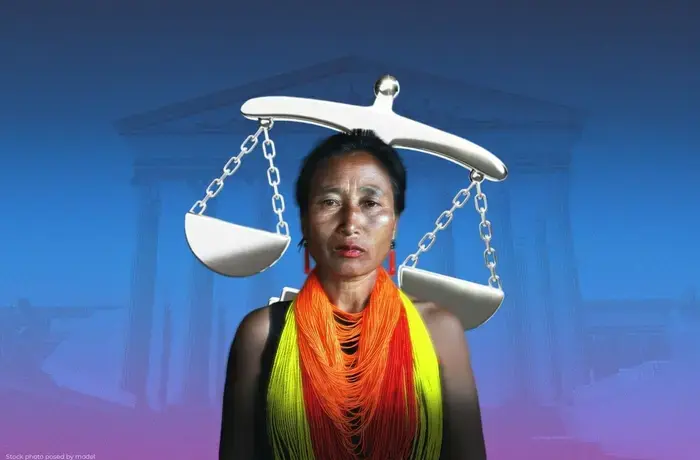
What justice means to women – and how to deliver it
Learn about legal equality for women and girls, the barriers to justice, and how we can break them down.

Time and time and time again.
“Because he’s my husband, the police wouldn’t arrest him.” “I couldn’t leave because I had no place to go.” “My family said I deserved it.” “I lost my job after speaking out.” “They were soldiers.” “They were powerful men.” “I was only a young girl."
If laws are made to protect what society values, what are we telling women and girls when our laws and justice systems fail to protect them?
Without fair and functional justice systems, our human rights are just words on paper. Unfortunately, many women and girls don’t even have that: Globally, women hold just two-thirds of the same legal rights as men. Meaning, laws that protect and guarantee the human rights to safety, freedom, and opportunities are biased against women and girls.
Not a single nation has achieved 100 per cent legal equality.
The latest United Nations Secretary-General’s report shows that the gender justice gap is even wider in practice: Weak enforcement of existing laws hardens the barriers that women and girls already face. And when justice fails women, the rule of law itself begins to collapse.
The time is now: We must act now to course-correct, strengthen women and girls’ access to justice, and give power — not just promise — to our rights. Thankfully, we already know how.
What does equal access to justice mean for women and girls?
What is justice? How do we access it?
Justice is a means to restore rights, dismantle systematic discrimination, build trust, and prevent future abuses by increasing accountability. This form of justice listens to and believes survivors, provides reparations, and holds perpetrators accountable. And in conflict settings, justice is not something to be delayed or reserved – but is essential for moving towards peace.
Justice recognizes women’s and girls’ rights, dignity, voice, and freedoms, and protects them: Women’s rights mean nothing if we cannot enforce them.
When we talk about how we access justice, we’re referring to the laws and systems, formal or traditional, that uphold and protect our rights and freedoms, address historic inequalities, and hold perpetrators accountable. These systems include police forces, criminal and civil courts, as well as community and religious leaders who enforce traditional justice systems.
What does access to justice look like in practice?
- Laws that protect women and girls from violence and end impunity. A woman can call the police – free from fear of retaliation or inaction – when she experiences abuse. Perpetrators know that they will be held accountable by the justice system.
- Laws that prevent and end discrimination. Women are guaranteed equal pay for work of equal value under the law – and can bring their employer to court for discrimination when those laws are broken. Or a girl’s right to attend school is legally protected, so she can grow up with the same opportunities as her male peers.
- Justice systems that believe women and girls, without bias. Police, lawyers, judges, and others in the justice system stop judging women and girls based on stereotypes and gender bias – so that survivors are not revictimized or blamed and justice is delivered.
- Legal aid that ALL women and girls can access and afford. For example, legal aid is made free for a woman who cannot afford the fees – and she can report injustice regardless of her race, language, income, or citizenship status.
- Support to recover when rights are violated. Survivors of female genital mutilation (FGM), sexual violence, or online abuse can access the health centres, counselling, and social services they need to recover.
Case open: Justice for all women and girls.
The People vs. Impunity against women and girls: When justice systems fail to protect women and girls, violence and discrimination spread – and impunity tells perpetrators that the rule of law does not matter. This explainer puts that failure on trial.
Why is access to justice essential for women’s rights?
When UN Women fights for the rights and empowerment of ALL women and girls, we fight for justice. With justice, rights become more than words on paper. Rights become power.
Without access to justice, women and girls have no way to hold perpetrators accountable. Rights are denied, abuse is ignored, and crimes go unsolved. Perpetrators hold the power. Entire societies lose.
While criminal justice is often top of mind for protecting women, many battles for women’s rights play out in civil courts. Civil justice directly influences the lived realities of women and girls.
And when women and girls can’t access legal entitlements – in areas of family law, labour, property, and more – it is women’s rights organizations who often step in to defend civil liberties and advance gender equality.
What prevents women from accessing justice?
In 7 out of 10 surveyed countries, women face greater barriers to justice than men, even when there are legal protections in place. Common barriers to justice include:
- Discrimination against women and girls: Even when they report injustice, women’s credibility may be questioned. Some survivors risk retaliation and social stigma for reporting a perpetrator.
- Lack of representation of women: The justice sector is overwhelmingly male dominated: the people who write the laws, the police who enforce them, and the judges who decide whose voice is believed. This makes the justice system less informed and less accountable towards women and girls.
- The implementation gap: No matter how a law is written, women and girls still face practical barriers, including costs, distance, language, and care responsibilities that deprive them of time to navigate the legal system. They may not even know their legal rights. The gap is even worse for young girls, older women, and women with disabilities who may find themselves financially or physically dependent on the people who are abusing them.
- Emerging technologies: Technology can be harnessed for good to expand access to justice, including digitized legal information and online hearings. But technology also creates new frontiers for abuse, including algorithms that harbour bias against women and girls. Perpetrators spread digital violence anonymously – often targeting women politicians, journalists, and activists – while regulations do not keep pace.
- Humanitarian crises and conflict: Conflicts, disasters, and crises strain the justice system. Domestic violence skyrockets. The rule of law weakens. From 2022 to 2024, the rate of conflict related sexual violence – including rape – increased 87 per cent. Perpetrators enjoy near complete impunity.
What can be done to advance women’s rights and deliver justice?
Justice doesn’t just happen. It is not simply given. Justice must be built – written, enforced, and funded.
Five actions governments can take to deliver justice:
- End impunity. Close the loopholes, enforce the laws, and hold perpetrators accountable.
- Fix the law. Remove discriminatory laws – laws that allow for treating women and girls unequally, condone them, or stay silent about violence against them. For example, laws that allow child marriage and FGM, or laws that disallow women from inheriting property and running for elected office.
- Fund justice. Ensure justice systems are sufficiently resourced, including funding for legal aid and survivor-centred justice services. Research shows that the benefits of government-supported legal aid and related services outweigh their costs.
- Invest in change. Fund women’s organizations as they drive transformative justice reforms, act as first responders and provide survivor-support services, mobilize public opinion, and more. The presence of women’s organizations is the most consistent predictor of government action against gender-based violence.
- Use technology and data, for good. With innovation and collaboration, our laws can deliver justice more effectively. Much more must be done to counter misinformation and discrimination, fight algorithmic bias and online abuse, expand gender data, and close the digital gender divide.
What progress and possibility look like:
Ways everyone can support equal rights and justice for women and girls:
- Know your rights and learn why justice matters.
- Speak up. Make this issue impossible to ignore.
- Show up. Support feminist organizations and movements.
- Demand leaders who prioritize women’s access to justice – not just in speeches, but in budgets and laws.
- UN Women supports women’s movements working for justice and equality worldwide. And you can support our work.
Infographic sources: 44% of countries; 54% of countries; 45 countries; 90% of Member States; 40 countries; 600 million